

Startup practices
An empty schedule needs patients before it needs rankings. Paid search and local search run first, since both produce bookings in weeks rather than months, and the slower channels build underneath while the practice fills.
IDental Billing is a dental marketing team inside a dental billing company. That means we've seen what a practice's numbers actually look like, which patients came back, what treatment got accepted, and where the schedule sat empty, before we spend a dollar on a campaign.
Digital marketing for dentists usually arrives split across vendors. Everything here runs in house instead. The person writing your ads sits near the person building your website and the person calling your lapsed patients, so campaigns get built as one thing rather than five separate invoices from five separate vendors.
Why us
Most dental marketing stops at the booking. The campaign produces a call, the call becomes an appointment, and what happens after that is somebody else's system. That gap is where the useful information lives.
An agency knows a form was submitted. We can see whether the appointment was kept, what treatment was accepted, and what it produced. That's the difference between reporting cost per lead and reporting cost per new patient.
Recall campaigns need practice management data, not an ad account. Patients overdue for a visit, treatment plans presented and never scheduled, insurance benefits about to reset. Those lists come from the same system we already work in.
A campaign that fills the schedule with a plan you're not credentialed for, or treatment the payer downgrades, produces less than it looks like on paper. Knowing the payer mix before building the campaign changes what we target.
New patients matter. New patients whose claims get paid matter more.
Local search
Online marketing for dentists starts with local search, because most new dental patients start with a map. They search for a dentist near them, look at the three results Google shows first, and pick one based on distance, reviews, and whether the profile looks maintained.
Dental office marketing starts here. Hours, services, insurance accepted, photos, and appointment links kept current. A profile that hasn't been touched in a year ranks below one that has.
Citations, category selection, service area setup, and the on-page signals that decide whether you appear in the map pack for your zip code.
Patient questions answered rather than left sitting, and posts published on a schedule. Both feed the profile signals Google uses to rank it.
Group practices and DSOs get each location managed as its own profile, so sites compete for their own neighborhoods instead of against each other.
Local search is where the most patients come from and where the least gets maintained.
Website
Most dental websites are built to look right rather than to book. A practice can rank well, run good ads, and still lose the patient in the ten seconds between landing on the site and finding a way to make an appointment. IDental Billing works on the site you have or builds a new one, depending on which gets you booking faster.
Most dental searches happen on a phone, and a page taking four seconds to load has already lost a share of them. Speed, tappable numbers, and a booking button above the fold decide whether the visit continues at all.
Someone searching for dental implants shouldn't land on a homepage. Service pages built for the treatments you want more of, carrying the cost, timeline, and insurance detail patients need before booking.
A real booking flow rather than a contact form landing in an inbox nobody checks until Monday. Most dental patients search outside office hours, which is exactly when a form fails and a booking tool works.
Dental lead generation only works when it's measured, so calls, forms, and bookings are tracked to their source and the channel producing each new patient is on record rather than guessed at the end of the month.
SEO
Ranking for dentist in a competitive city takes years and brings whoever is closest. Ranking for implants, clear aligners, or emergency appointments brings patients who already know what they want and are further along in deciding.
A page for each treatment you want to grow and each area you serve, written for what a patient is actually searching rather than a paragraph on a services list. This is the work that decides whether you rank in your own neighborhood before you rank anywhere else.
What implants cost, whether a root canal hurts, what insurance covers, how long treatment takes. These are the questions patients ask before they book, and answering them properly is what earns the ranking.
Site speed, mobile rendering, structured data, and the crawl issues that quietly hold a site back regardless of how good the content is.
SEO takes months to show up, which is why it runs alongside ads rather than instead of them.
Paid search
Dental advertising is the fastest channel on this page. SEO takes months. Ads take days. A practice with gaps in the schedule next week needs the second one, which is why paid search usually runs first and keeps running once the rest catches up.
Implant cases, clear aligners, new patient exams, or filling a specific day. The treatment you want more of decides the keywords, the budget split, and what a successful month looks like.

Search campaigns for treatment intent, local campaigns for proximity, and retargeting for the patients who visited and didn't book. Landing pages built to match each one rather than pointing everything at the homepage.

Bids, negative keywords, ad copy, and budget moved toward whatever is producing patients. This is weekly work, not a set-and-forget campaign that runs the same way in month six as it did in month one.

Cost per new patient, calls that turned into appointments, and which campaigns produced the treatment you asked for. Click-through rates are in there, but they aren't the number that matters.
Ad spend is the one channel where a bad month costs real money, so it gets watched weekly rather than reviewed at the end of the quarter.
Reviews
A patient comparing three practices in the map pack looks at the star rating, reads the two most recent reviews, and picks. Ranking well and having a strong website matters less than most practices think if the profile above it shows 3.9 stars and a complaint from last month sitting unanswered.

Requests sent after appointments, timed for when the visit is still fresh and going to the patients most likely to leave something positive. Most practices ask nobody and rely on whoever felt strongly enough to volunteer.

Every review answered, including the difficult ones. A measured reply to a complaint reads better to the next patient than no reply at all, and Google treats an active profile as a maintained one.
Review volume and recency are local ranking signals, so this work pushes the map pack results in the local search section rather than sitting separately from them. The two run together.
Reviews are the cheapest dental practice marketing a practice has and the easiest to leave running on its own.
SOCIAL
Social is the smallest part of dental practice marketing and rarely brings a practice new patients directly. What it does is confirm the practice is real and active when someone checks after finding you somewhere else, which happens more often than most owners realize.

Posts published on a set schedule across the platforms your patients actually use. Enough activity that a profile looks maintained, without a content plan nobody has time to feed.

Before and after cases, treatment explanations, and practice updates that also work as website content and review prompts. The same effort feeding three channels instead of one.
Social is a credibility check, not a patient source, and it gets budgeted accordingly.
Recall
A practice with 2,000 active patients usually has several hundred who haven't been seen in over a year. They already trust the practice, their records are in the system, and reaching them costs a fraction of what it takes to find someone new. Most practices know this and still don't run the campaigns, because pulling the list is somebody's afternoon and nobody has the afternoon.
With your permission and a signed BAA, IDental Billing pulls the list from your practice management software rather than from a marketing tool guessing at it. Patients overdue for recall, treatment plans presented and never scheduled, and anyone whose last visit was long enough ago that they've probably drifted to another practice.

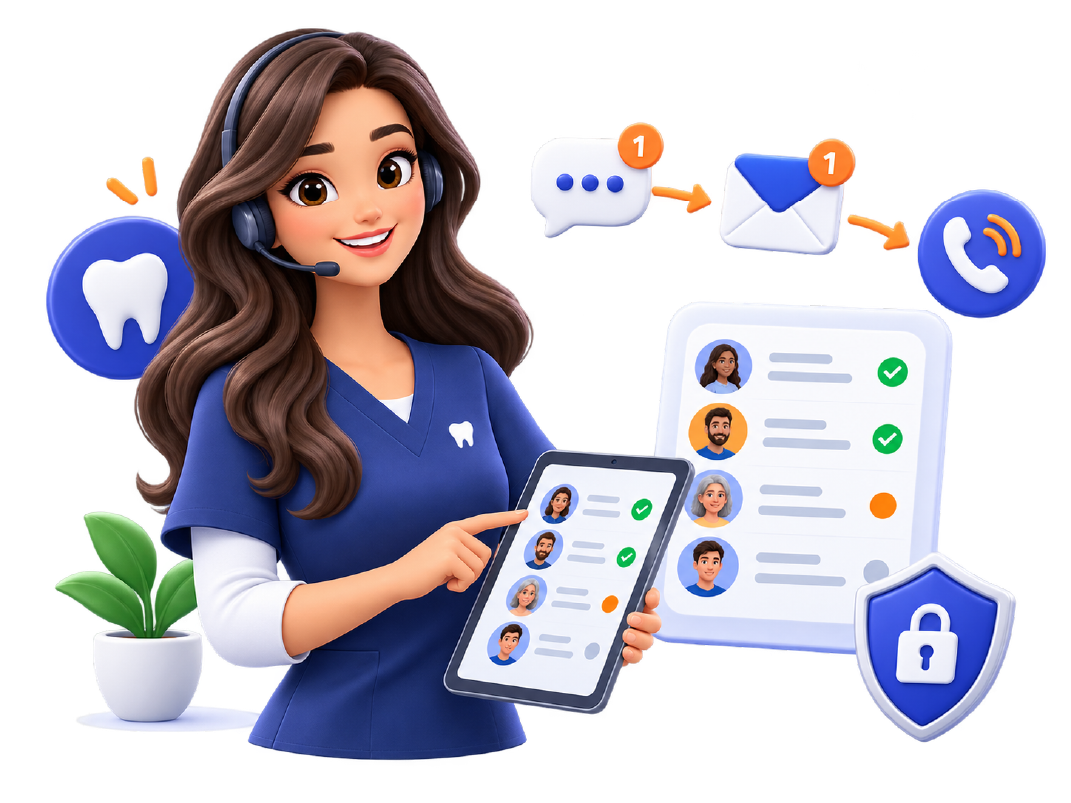
Then the outreach goes out in sequence rather than as one blast. Text first because it gets read, email for the patients who respond to it, and a call list for the high-value cases where a treatment plan is sitting unaccepted. Each message references what the patient is actually due for, since a generic we miss you performs worse than you're due for a cleaning and your insurance benefits reset in January.
Patient data stays inside your systems and ours, handled under the same HIPAA safeguards as the billing side. Nothing goes to a third-party marketing platform that wasn't built for protected health information.
Reactivation is the cheapest new patient a practice can get, and it's the campaign most agencies never run because it doesn't require ad spend.
Specialty
Marketing for dental practices in a specialty changes shape, because a specialty practice markets to two audiences at once. Patients searching directly, and referring general dentists who send cases. Most dental marketing treats only the first one, which is why referral relationships tend to sit outside the marketing plan entirely.

Clear aligner searches carry high intent and high competition, and the decision is usually made on cost, timeline, and whether treatment can start soon. Campaigns built around consultations rather than general awareness.

Extractions and implants come from patients in pain and from referring dentists. Both need different messaging, and the referral side needs something a website alone doesn't provide.

Almost entirely referral-driven. Marketing here means staying visible to the general practices that send cases, alongside the smaller share of patients who search directly.

Parents choose on trust, location, and whether the practice looks like somewhere a child would be comfortable. Reviews and photos carry more weight here than in any other specialty.

Elective, high-value, and researched carefully before anyone books. Before and after work, financing information, and consultation booking do most of the converting.
Every specialty on this list has search volume its general dentistry equivalent doesn't, and less competition for it.
Reporting
Most dental practice marketing reports lead with impressions, clicks, and keyword rankings. None of those tell a practice owner whether the month was worth the spend. IDental Billing reports on the numbers that appear in your production, because we can see them.
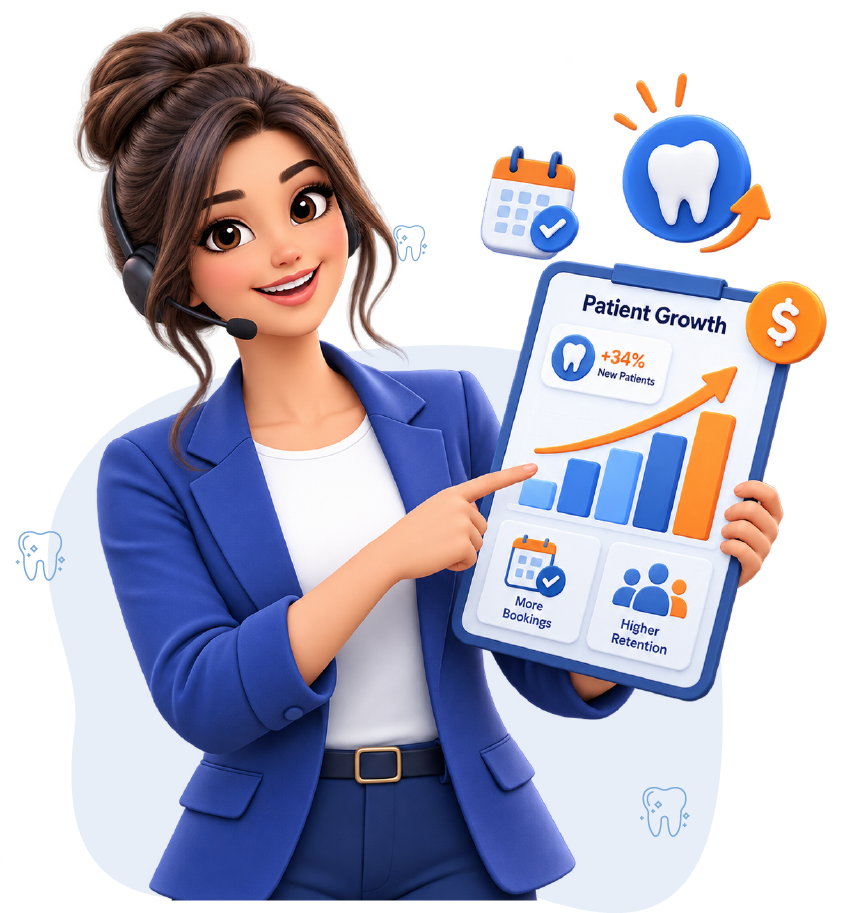
The last three need access to your practice management data, which billing clients already have in place. For marketing-only accounts we set it up with your permission and a signed BAA.
Rankings and traffic are in the report too. They just sit underneath the numbers that decide whether the marketing is working.
The full loop
Dental practice marketing gets a patient to book. What happens next decides whether that patient was worth acquiring, and most of it sits outside a marketing agency's reach.
A campaign produces a call. The patient books. Their benefits get verified before they arrive, so the treatment coordinator quotes accurately rather than guessing, and the patient hears a number they can actually plan around. Treatment gets accepted more often when the estimate holds up.
The claim goes out clean because the coding matched the notes and the benefits were confirmed upstream. It gets paid without a denial, an appeal, or three weeks in accounts receivable. The revenue from that patient lands in the month it was earned rather than the quarter after.
Then the same patient shows up in the recall list eighteen months later, and the loop starts again without a media budget.

A practice adding new patients while claims sit unpaid is spending on growth it isn't collecting.
Practice types
Dental marketing strategies depend on where a practice is. A new office with an empty schedule and an established practice with a full one are solving different problems with the same channels.
An empty schedule needs patients before it needs rankings. Paid search and local search run first, since both produce bookings in weeks rather than months, and the slower channels build underneath while the practice fills.
The schedule is mostly full and the gaps are specific: a slow day, a treatment the practice wants more of, or production that plateaued. Recall campaigns and treatment-focused work usually move those faster than broad awareness spending.

Each location competes in its own neighborhood, which means separate profiles, separate local targeting, and reporting that shows which sites are producing and which aren't. One standard applied everywhere, measured per location.
Affordable dental marketing starts with knowing the benchmark. Most practices land between 3% and 8% of collections, with startups at the higher end and established practices lower. A practice collecting $80,000 a month is usually spending $2,400 to $6,400 across all channels, including ad spend and management.
Paid search produces bookings within days of launch. Local search improvements usually show inside 60 to 90 days. SEO takes longer, often six months before it contributes meaningfully. Recall campaigns produce appointments in the first few weeks, since those patients already know you.
It varies by treatment and market. A new patient exam costs far less to acquire than an implant case, and a competitive metro costs more than a rural area. The number that matters is cost per new patient against what that patient produces, which is why we report both.
Usually yes, though not immediately. Ads stop producing the day you stop paying. SEO builds an asset that keeps working, which is why they run together rather than as alternatives. A practice with an empty schedule should start with ads and add SEO once patients are coming in.
Calls, forms, and bookings are tracked to their source before any campaign starts. For billing clients we can follow that through to the appointment and the treatment accepted, which is where cost per new patient actually comes from.
Yes. We work on the site you have or build a new one, depending on which gets you booking faster. A site that mostly works usually needs conversion changes rather than a rebuild.
Get a clear look at the channels, tracking, and opportunities affecting your dental practice marketing.
Send us your practice details and an IDental Billing specialist looks at what's currently bringing patients in: your local search visibility, your website's booking flow, your reviews, and the channels you're already paying for. You'll get a plain read on what's working and what's leaking, whether you hire us or not.